Stars
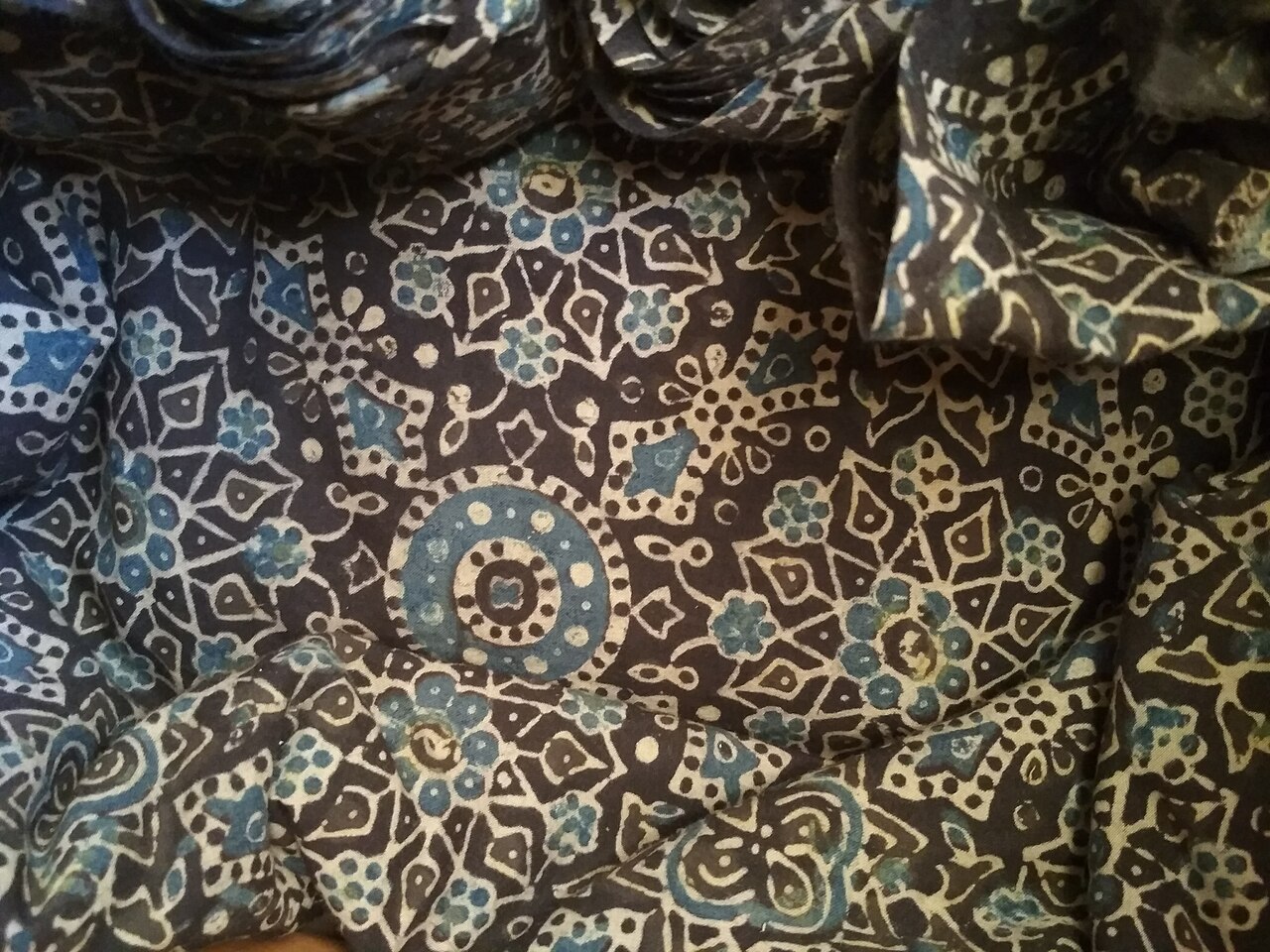
Small multi-point stars fill open ground and suggest the desert night sky under which many printing communities have worked for generations.
Motifs
Every Ajrakh cloth is built from a small family of repeating shapes. Once you can name them, the whole print starts to read like a language rather than a pattern.
Reading the layout
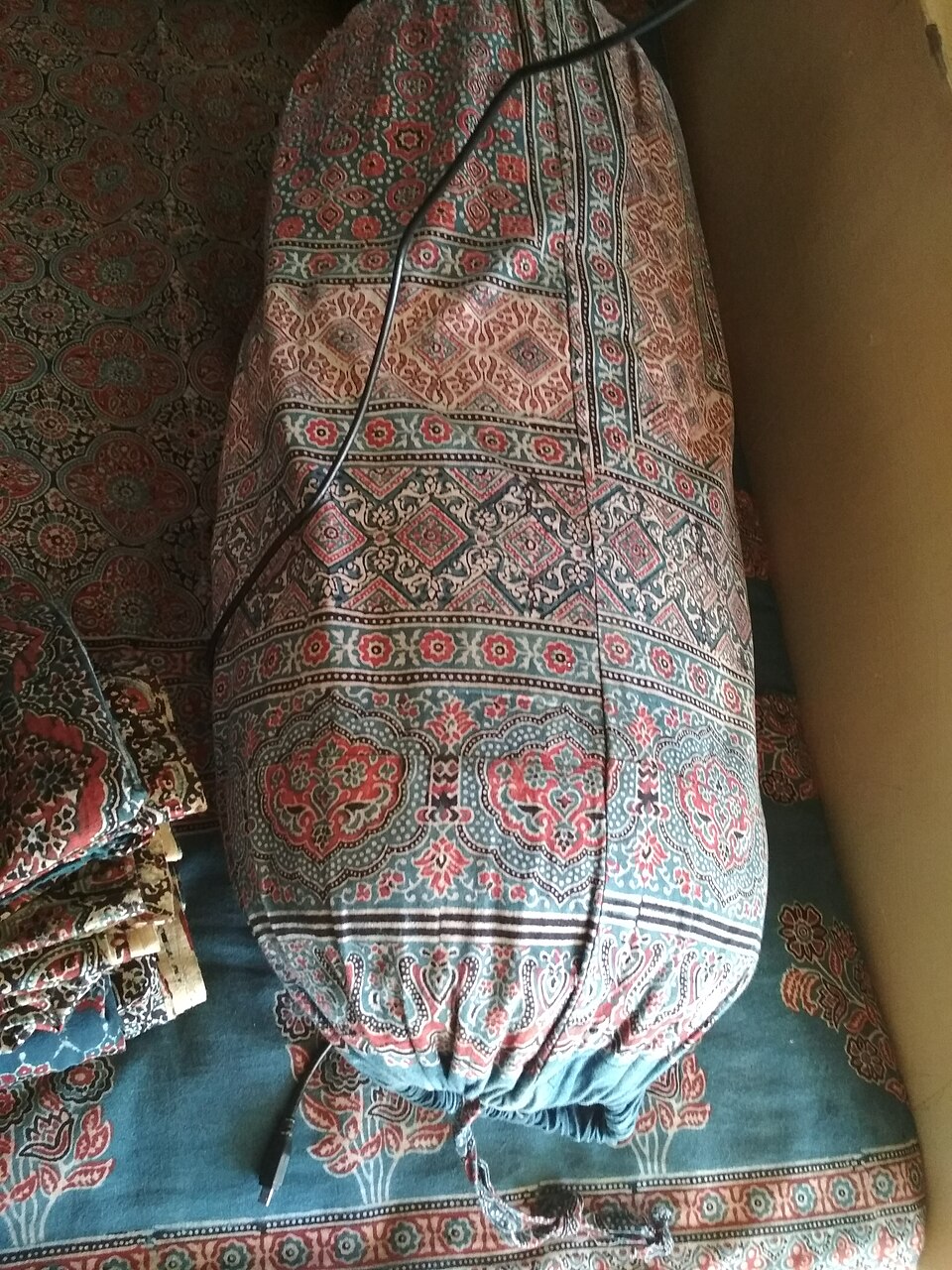
Most Ajrakh compositions work in three layers. An outer border frames the cloth like a picture frame. An inner field carries a repeating motif across the whole surface. A centre point, when present, anchors the eye and balances the piece when it is folded, worn or displayed.
This structure is not decorative accident. It comes from the practical limits of wooden hand blocks, which are carved to repeat cleanly, and from a design habit of building large surfaces out of small, disciplined units.
Motif families
Ajrakh motifs draw on the natural world, the night sky and everyday craft tools. The exact names and small variations differ between printing families, but a few forms turn up again and again.
Small multi-point stars fill open ground and suggest the desert night sky under which many printing communities have worked for generations.
Rosettes and stylised blossoms stand for renewal and seasonal change, and often sit at the centre of a larger repeating unit.
Running lines, zigzags and small repeated units hold the composition together, giving the eye a clear edge to rest on.
Why the geometry works
A well printed Ajrakh cloth balances density with open space. If every inch is filled, the eye has nowhere to land. If too much space is left bare, the print looks unfinished. Experienced block printers judge this balance by eye, spacing each impression by hand rather than by machine.
This is also why two Ajrakh pieces with the same motif can look different up close. Small shifts in block placement, pressure and dye pickup give every length of cloth its own character, even when the underlying design is shared.
A motif repeated by hand is never quite the same twice, and that is exactly what makes it feel alive.Ajrakh.com editorial note