Fabric washing
Cotton or silk is cleaned to remove starch, oil and impurities so dye can enter evenly.
How it is made
Ajrakh is a resist and mordant printing practice. The design is built in layers, not applied in one quick pass. Each wash, paste and dye bath changes how the next colour will behave.
Traditional workflow
Exact sequences vary by workshop, fabric and design, but authentic Ajrakh commonly follows a multi-stage rhythm like this.
Cotton or silk is cleaned to remove starch, oil and impurities so dye can enter evenly.
Myrobalan prepares the cloth and helps later colours bond with the fibre.
Iron-based paste and carved wooden blocks establish the design structure.
Gum, clay, lime or related pastes protect selected areas from dye.
The cloth enters a natural indigo vat, then oxidizes in air to reveal blue.
Madder or alizarin with mordants creates the deep red fields and accents.
Repeated washing clears excess paste and reveals the final contrast, handle and brightness.
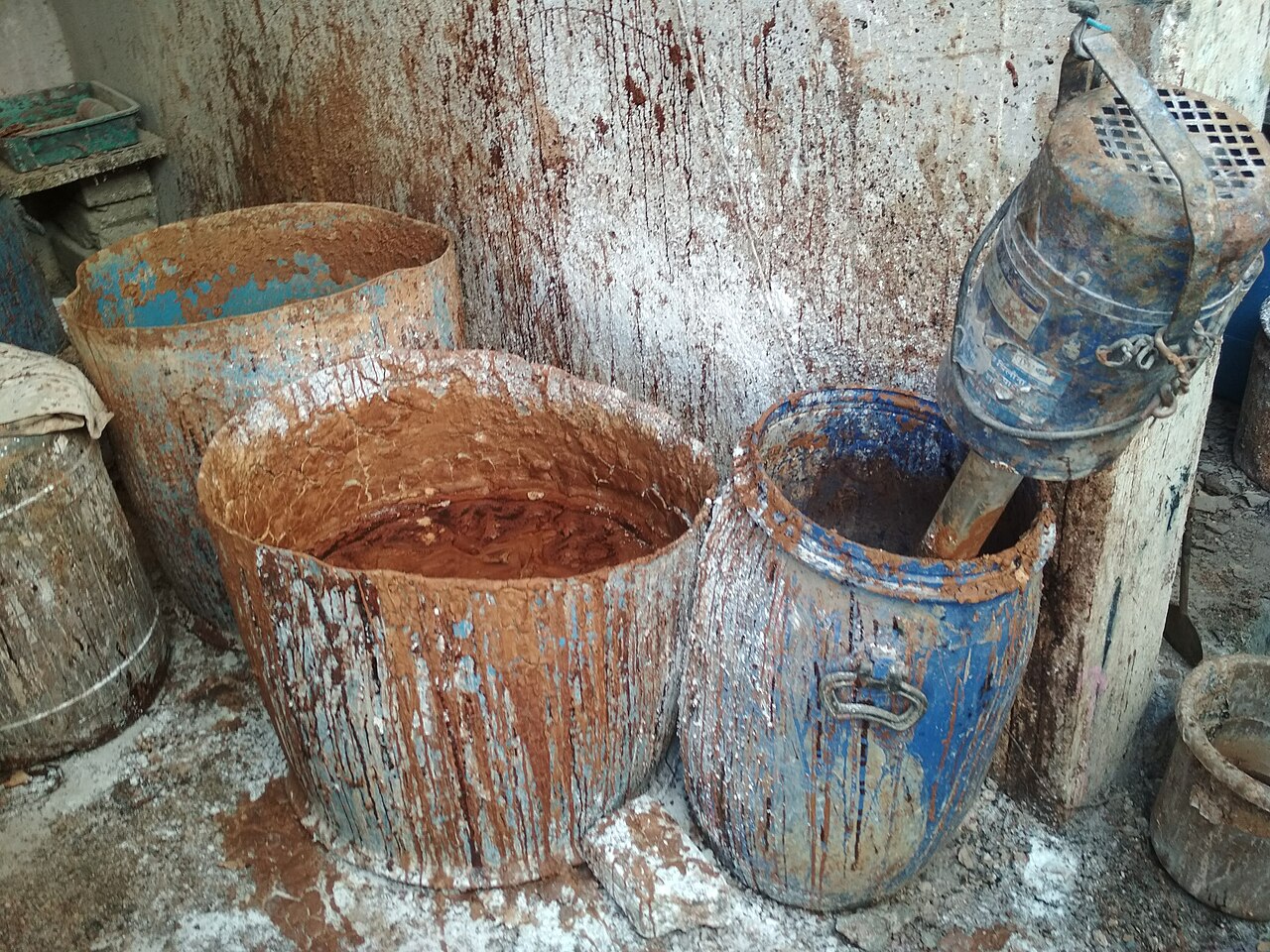
Carved wooden blocks, dye vats, printing tables, trays, resist pastes, mordants and water are the studio essentials.
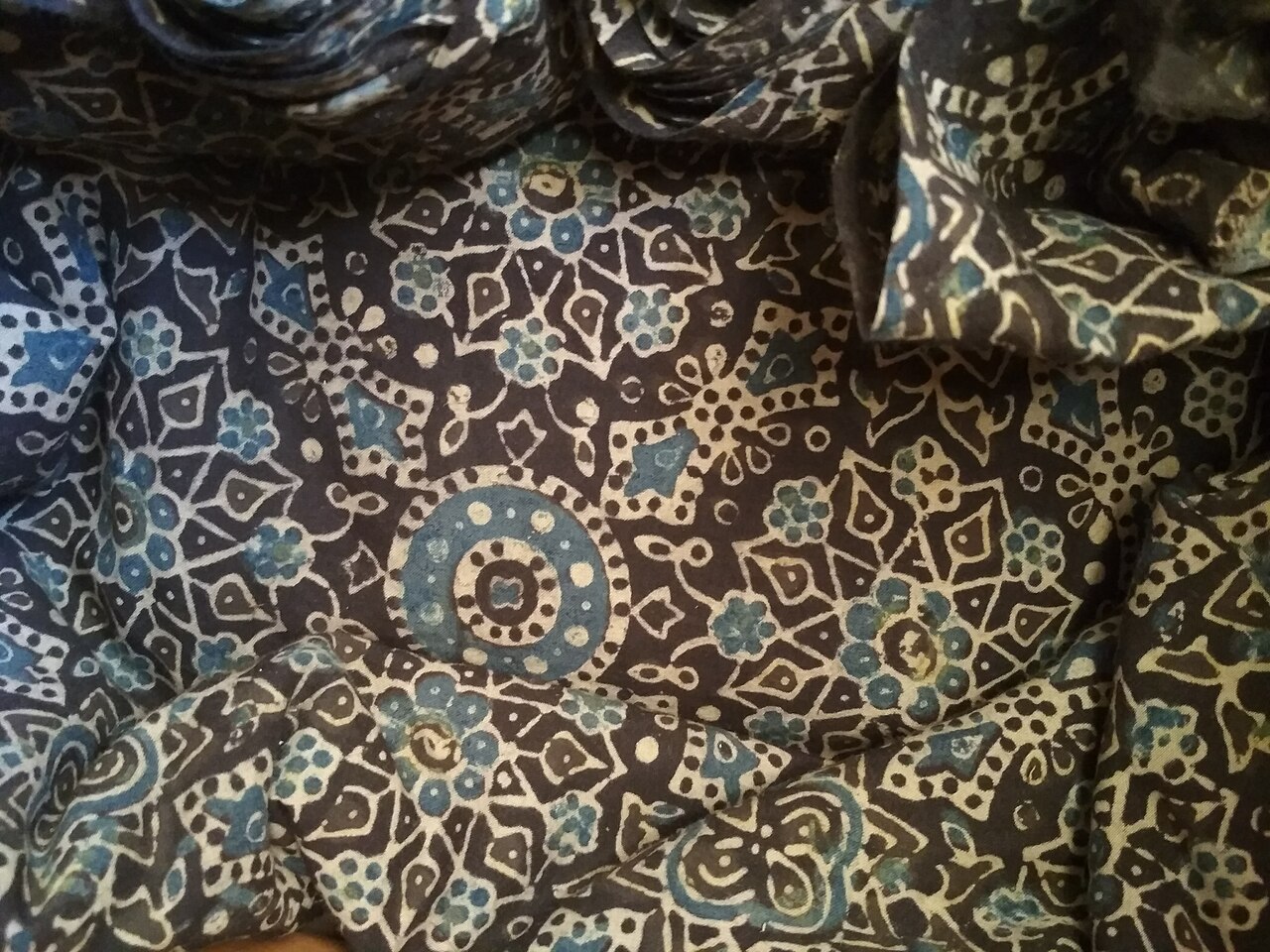
The printer must align blocks by eye and pressure by hand. Small variations are part of the beauty, not a defect.