Indigo Blue
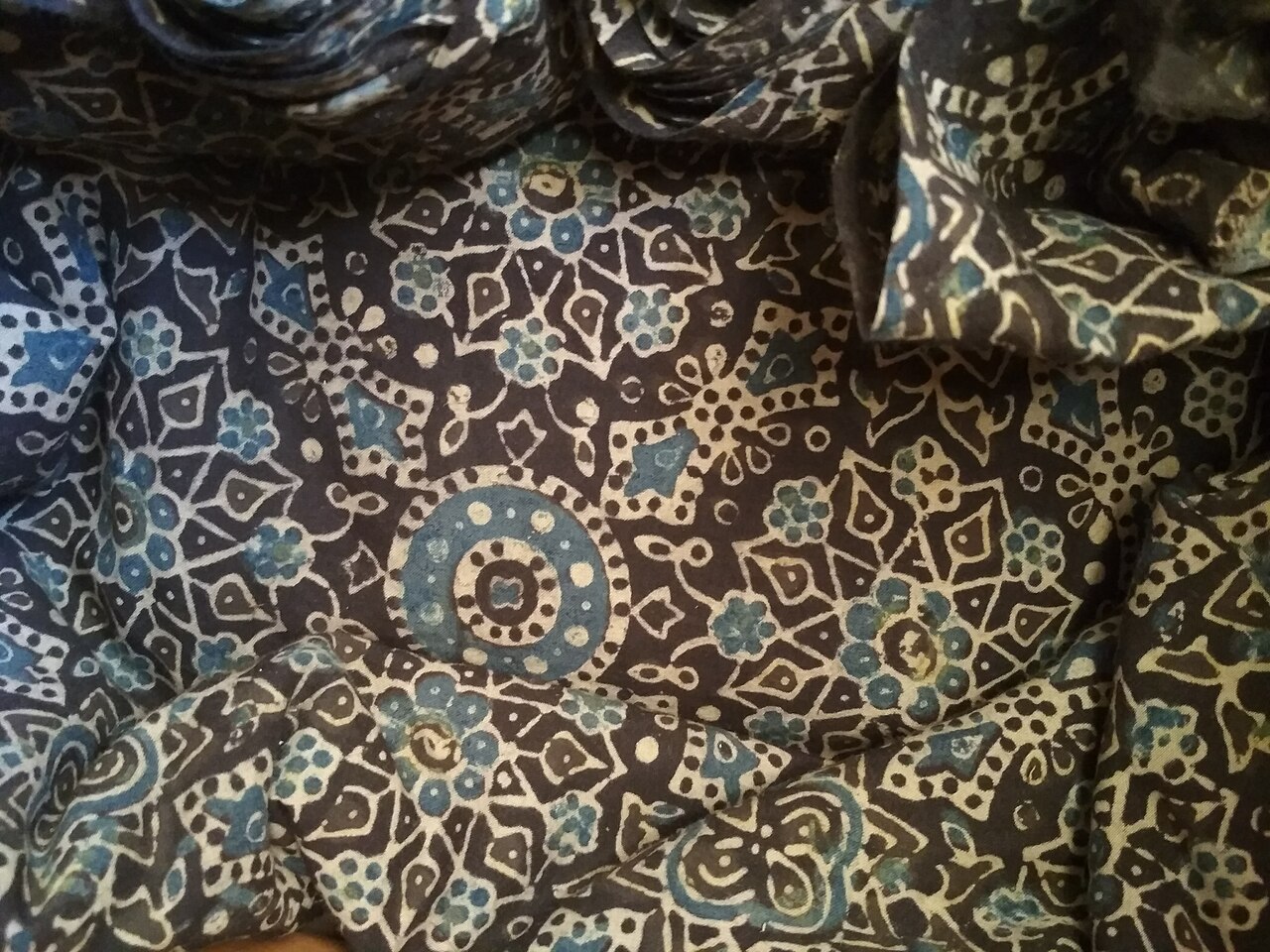
Blue is the signature colour, associated with depth, protection, night skies and the chemistry of fermented dye vats.
Art history
Ajrakh belongs to the textile geography of Sindh, Kutch, Gujarat, Rajasthan and the wider Indus cultural region. Its name is commonly linked with azrak, the Arabic word for blue, echoing the indigo that anchors the craft.
Origins and movement
Ajrakh developed through centuries of textile skill in regions connected by pastoral routes and trade. In India, Kutch became one of the strongest centres after Khatri printing families settled and refined the craft in villages such as Dhamadka and Ajrakhpur.
The cloth served practical, social and ceremonial roles. It could be a turban, shoulder cloth, veil, wrap, wedding textile or daily marker of identity. The symmetry and dense colour made it both durable and dignified.
Cultural relevance
Ajrakh motifs often connect stars, flowers, water, grids and borders into a meditative field. The visual order reflects both technical precision and a worldview shaped by sky, desert, migration and community rituals.
Blue is the signature colour, associated with depth, protection, night skies and the chemistry of fermented dye vats.
Red brings warmth and ceremonial richness, traditionally created through roots, mordants and repeated dye work.
White is not simply empty space. It is protected cloth, revealed after resist paste blocks dye from entering selected areas.
Ajrakh survives because it is useful, beautiful and adaptable. Its past is deep, but its future is still being printed by hand.Ajrakh.com editorial note